

I have lost count of the number of Tuesday mornings I have sat across from a woman who says the same thing. She wants to pray more. She reads her Bible most days, she loves the Lord, and yet her prayer life feels like a string of good intentions that keep slipping away. If that is you, I want you to know something first: you are not undisciplined, and you are not failing at faith. You are missing a workable system, and a workable system is exactly what the 52 Week Prayer Journal for Women by Shannon Roberts gave me when I needed it most.
I am Darlene Whitaker. I have led the Tuesday morning women's Bible study at my church in Conway, Arkansas for about twelve years, and I have spent most of those years trying different ways to keep a steady quiet time. Some worked for a season. None of them stuck until I stopped trying to pray more and started praying the same way at the same time every single day. This article walks you through the five steps that finally built my prayer habit, step by step, using the journal that made it possible.
Start tomorrow morning with a journal that walks you through every week
The 52 Week Prayer Journal for Women gives you a Scripture, a devotion, and guided prompts for each week of the year. You do not have to plan anything. You just open it and start.
Amazon Check Today's Price on Amazon →Step 1: Pick a Time and Anchor It to Something You Already Do
The biggest mistake I see in my Bible study group is choosing a prayer time based on how we wish our mornings looked instead of how they actually look. One of our members is a nurse who works nights. Another has three children under six. The idea that everyone should pray at dawn is not in Scripture; the idea that we should pray without ceasing is. So step one is not about becoming a morning person. It is about finding the five minutes in your real day that already belong to you.
For me, that time is 6 AM. I have a recliner by the living room window, and I sit there with a cup of coffee before the house gets loud. I chose that hour in October, right after I turned sixty, when I finally admitted that my evenings were never going to be quiet enough. Glenn watches the news until ten, and by then I am done for the day. The coffee was already part of my morning, so I did not add a new habit to my day; I attached prayer to a habit I already had. When you anchor a new practice to an existing one, you stop relying on willpower and start relying on rhythm. The window faces east, and in the winter the sun comes up just as I am turning the page.
Write your anchor down in the front of your journal. Mine says, Coffee in the recliner, then open the journal. That single sentence has done more for my consistency than any amount of resolve ever did. If mornings truly cannot work for you, pick lunch, or the car line, or right before bed. The exact hour matters far less than the fact that you have one.

Step 2: Start Smaller Than You Think You Should
Here is where I almost quit. When I first tried to build a prayer habit, I told myself I would spend a full hour in prayer every morning. I started on a Monday in January with a reading plan, a fresh journal from the Christian bookstore, and a 5:30 alarm. I lasted four days. The fifth morning I slept through the alarm, woke up at 6:45 already behind, and felt so guilty that I skipped the whole thing for two weeks. That is the pattern that keeps so many of us stuck: we aim for a grand gesture, fall short, and then abandon the practice entirely instead of simply adjusting the size. I have watched that same cycle play out in my Tuesday group at least a dozen times over the years.
The 52 Week Prayer Journal for Women solved this for me without meaning to. Each week is laid out with a Scripture reading, a short devotion, and guided prompts. You cannot do it wrong, and you cannot easily overcommit to it. Ten minutes with this journal is a complete quiet time. Some days I sit longer, but the journal never demands more than I have to give.
If you are new to this, I want you to commit to five minutes. Not twenty. Five. The goal for the first month is not depth; it is showing up. A five-minute prayer that happens every day will change your faith more than a forty-five-minute prayer that happens twice a month. You can always grow the time later, and you will, because the habit will start carrying you.
Step 3: Use the Weekly Structure So You Never Have to Decide What to Pray
The most common reason I hear for a stalled prayer life is not a lack of desire. It is a lack of direction. We sit down to pray, and suddenly our minds go blank, or we pray the same three things we prayed yesterday, or we get distracted by the grocery list. The journal removes that entire problem because it tells you what to do each week.
Shannon Roberts designed the 52 Week Prayer Journal for Women around a simple rhythm. Each week opens with a Scripture, walks you through a short devotion, and then gives you guided prompts for your prayers. Week 12, for example, paired Psalm 46 with a devotion about asking God for help without apologizing for needing it. Some weeks you will write out thanksgiving. Some weeks you will work through confession. Some weeks you will intercede for specific people. The variety keeps the habit fresh, and the structure keeps it doable. I have never once opened this journal and wondered what I was supposed to do next, which is more than I can say for the blank notebooks I tried in the years before.
I have seen this work in my Tuesday morning group more times than I can count. The way Shannon lays out each week means women who could never figure out what to say during prayer time suddenly have a starting point. One of our quieter members, who usually lets others pray before she says a word, read her written prayer aloud for the first time in three years during Week 8. The journal does not replace the Holy Spirit's leading; it simply clears away the blank page so you can actually listen. For me, that has been the difference between praying and planning to pray.
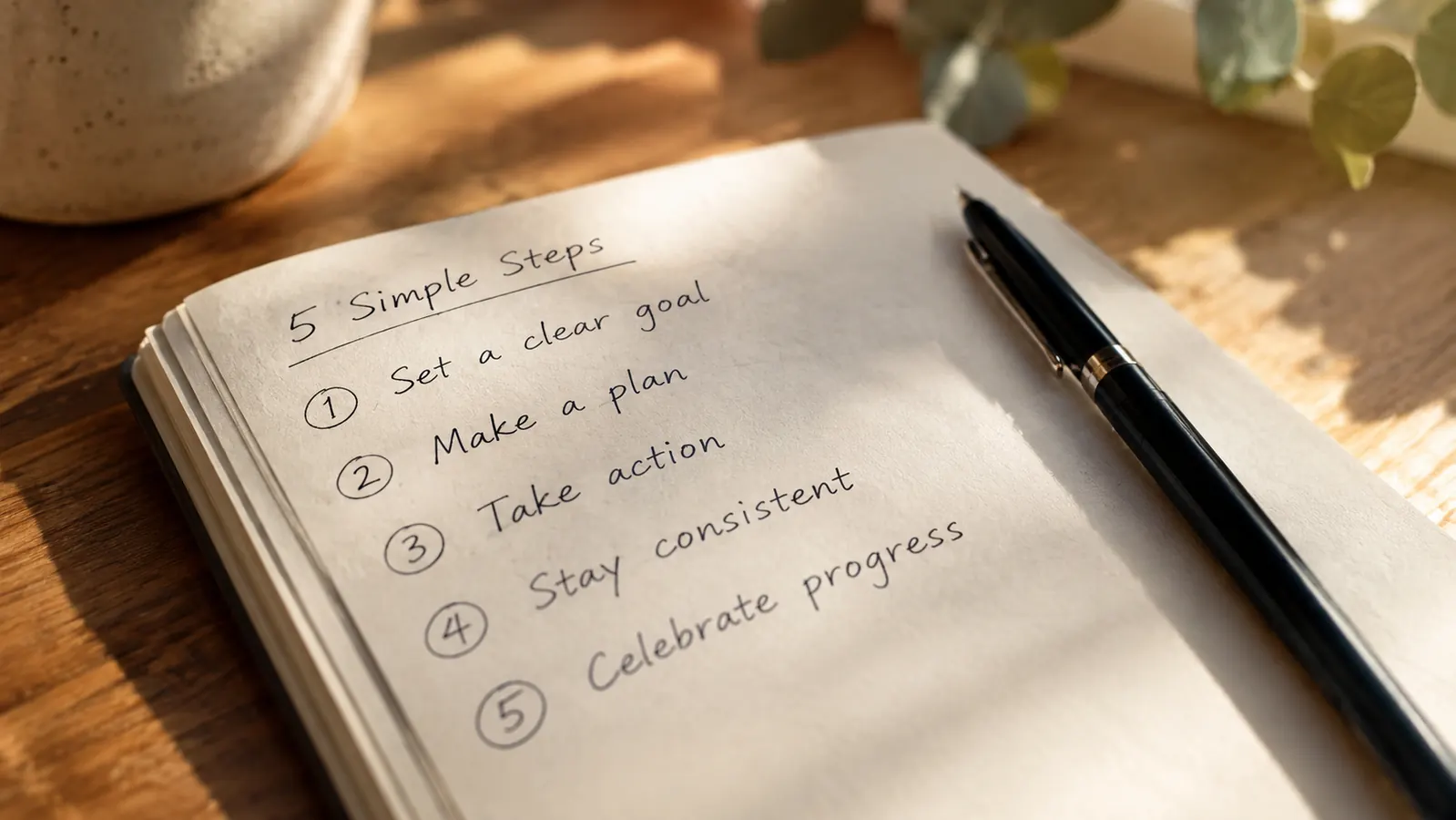
Step 4: Track Your Consistency Without Turning It Into a Scorecard
There is a delicate balance between building a habit and turning your quiet time into a performance. I have seen women quit prayer entirely because they missed three days and decided they had ruined everything. That is not how habits work, and it is not how grace works either. The journal helps here because it gives you a gentle place to mark your progress without turning it into a legalistic checklist.
Each week in the 52 Week Prayer Journal for Women has space for you to write, reflect, and look back at what God has done. I keep a small pencil dot in the upper corner of each page for the days I actually sat down with it. In March of this year, I counted twenty-three dots out of thirty-one days. The week of the church directory photo, there were two. The point is not a perfect record; the point is that I can look back over a month and see that I prayed far more often than I did before I had a system. That March page is still one of my favorites, not because it is full, but because it proves the habit can survive a busy season.
If you miss a day, here is what I want you to do: do not skip the next one out of guilt. Just open the journal to today's page and start again. I have a sticky note in the back of mine that says, Start where you are, not where you left off. Missing one day is a detour. Missing a week because you were upset about missing one day is the actual problem. The habit survives because you return to it, not because you never stumble.
Step 5: Let the Habit Grow Into Something That Feeds Others
Every habit reaches a point where keeping it for yourself is not enough. For me, that happened about three months in, when a woman in my Bible study mentioned during our prayer circle that she wished she could pray more consistently. I told her about the journal, and the following Tuesday she showed up with her own copy, already marked up with two days of notes. Watching her build the same habit changed the way I thought about my own quiet time. It stopped being a private discipline and became something I could hand to another person.
There is something about writing your prayers down that makes them real in a different way. When you write out a request and then look back weeks later and see how God answered it, your faith gets a memory. That is what the 52 Week Prayer Journal for Women has given me: not just a daily habit, but a record of faithfulness that I can hold in my hands.
You do not have to lead a Bible study to share this. Tell a friend what you are doing. Ask someone to ask you about it. Invite one other woman to try the same weekly structure for a month. Accountability is not about reporting your failures; it is about having someone who cheers for you when you show up. That shared journey has kept me going more times than I can count.
What Else Helps
A journal is the centerpiece, but a few small things have made my habit stickier over the years. I keep my journal in the same place every night, on the little table beside my recliner, so I do not have to hunt for it at 6 AM. I also keep a pen tucked inside it, one of the blue Pilot G2s I buy in a six-pack at the office supply store. That sounds too simple to matter, but the friction of finding a pen has ended more quiet times than I would like to admit. I learned that the hard way one January morning when I spent eight minutes digging through the desk drawer and gave up before I ever opened the journal.
I also use my phone's alarm, but I label it something other than Prayer. I learned that if the alarm says Prayer, my sleepy brain dismisses it as optional. Mine just says Coffee, and by the time I am in the recliner with the mug, the journal is already in my lap. If you pray at a different time of day, find the anchor that works for you and make it as automatic as brushing your teeth.
The journal does not replace the Holy Spirit's leading; it simply clears away the blank page so you can actually listen.
One more thing that helped me: I stopped telling myself I was too tired to pray. I started telling myself I was too tired not to. On the hardest mornings, I open the journal and read only the Scripture for the week. Some days that is the whole quiet time, and that is enough. The habit survives because it is small enough to keep, not because I am strong enough to power through.
Give yourself six weeks and see what a steady prayer life feels like
The 52 Week Prayer Journal for Women has guided thousands of women through a year of Scripture, devotion, and prayer. Start with one week, then another, and let the habit build itself.
Amazon Check Today's Price on Amazon →