

If you have been leading a Bible study for as long as I have, you have watched the same thing happen a dozen times. A woman joins the group, excited about a brand new Christian book. She reads it fast, underlines half of it, and tells everyone it changed her life. Then, three months later, she sheepishly admits she is back to the same old habits and the same old exhaustion. The book was good. The change did not stick.
That is the problem I kept running into before I found Peter Scazzero's Emotionally Healthy Spirituality. I did not need another book that told me to pray harder or read more Scripture. I needed one that explained why I kept running on empty even when I was doing all the right Christian things. I have now worked through this book twice, once alone in my quiet time and once with my Tuesday morning women's Bible study, so I can compare it honestly with the other popular Christian books sitting on my shelf.
| Emotionally Healthy Spirituality | The typical Christian self-improvement book | |
|---|---|---|
| Core focus | Links emotional health to spiritual maturity, with practical daily habits | Focuses on one spiritual practice or discipline, often in isolation |
| Daily routine fit | Built for slow, daily work with reflection questions after every chapter | Best read straight through; application usually left to the reader |
| Small group use | Pairs with a study guide and video series designed for groups like mine | Usually a solo read with no group materials |
| Difficulty | Honest about the hard inner work; some chapters require real sitting with discomfort | Lighter and more encouraging, but can stay on the surface |
| Best for | Longtime church folks who are busy, tired, and ready to go deeper | Newer readers who want a gentle introduction to spiritual growth |
Where Emotionally Healthy Spirituality Wins
The biggest difference showed up in my own quiet time. Most Christian books I have read over the years are written to be consumed, like a good meal you finish and then forget. Peter Scazzero writes to be practiced. Every chapter ends with reflection questions that actually make you stop. The first time I worked through the book, I spent a whole week on one chapter because the questions about my family history and my patterns of avoiding conflict kept pulling me up short. That is not a flaw. That is the point.
It also wins on the connection between emotional and spiritual health. Peter Scazzero names something I had watched in myself for years: I could lead a Bible study, serve on committees, and say all the right things, while privately carrying resentment and exhaustion. The book gave me language for that gap and a way to close it. In my group, three of the ten women told me it was the first book that made them feel seen rather than scolded. That is rare in this category.
Where the Alternatives Win
I want to be fair, because the alternatives are not bad books. If you are new to this kind of reading, a lighter Christian book can be a gentler door in. Some of the popular titles on the shelf are easier to read in a weekend, they feel encouraging from the first page, and they do not ask you to sit with uncomfortable questions about your own behavior. For a woman who is just starting to build a faith routine, that can be exactly the right thing.
The alternatives also win on sheer momentum. You can finish one in a week and feel a real sense of accomplishment. Emotionally Healthy Spirituality is a slower read, and that can be discouraging if you are used to checking books off a list. I had one woman in my group who set it aside for two months because the reflection questions made her uncomfortable. She came back, and she told me the discomfort was the point, but I would be dishonest if I pretended that never happens.
Ready to stop running on empty and start the slow, steady work?
Peter Scazzero's Emotionally Healthy Spirituality is the book I keep coming back to, and the one I hand to women in my group who are tired of surface-level faith.
Amazon Check Today's Price on Amazon →How I Put Both Kinds of Books to the Test
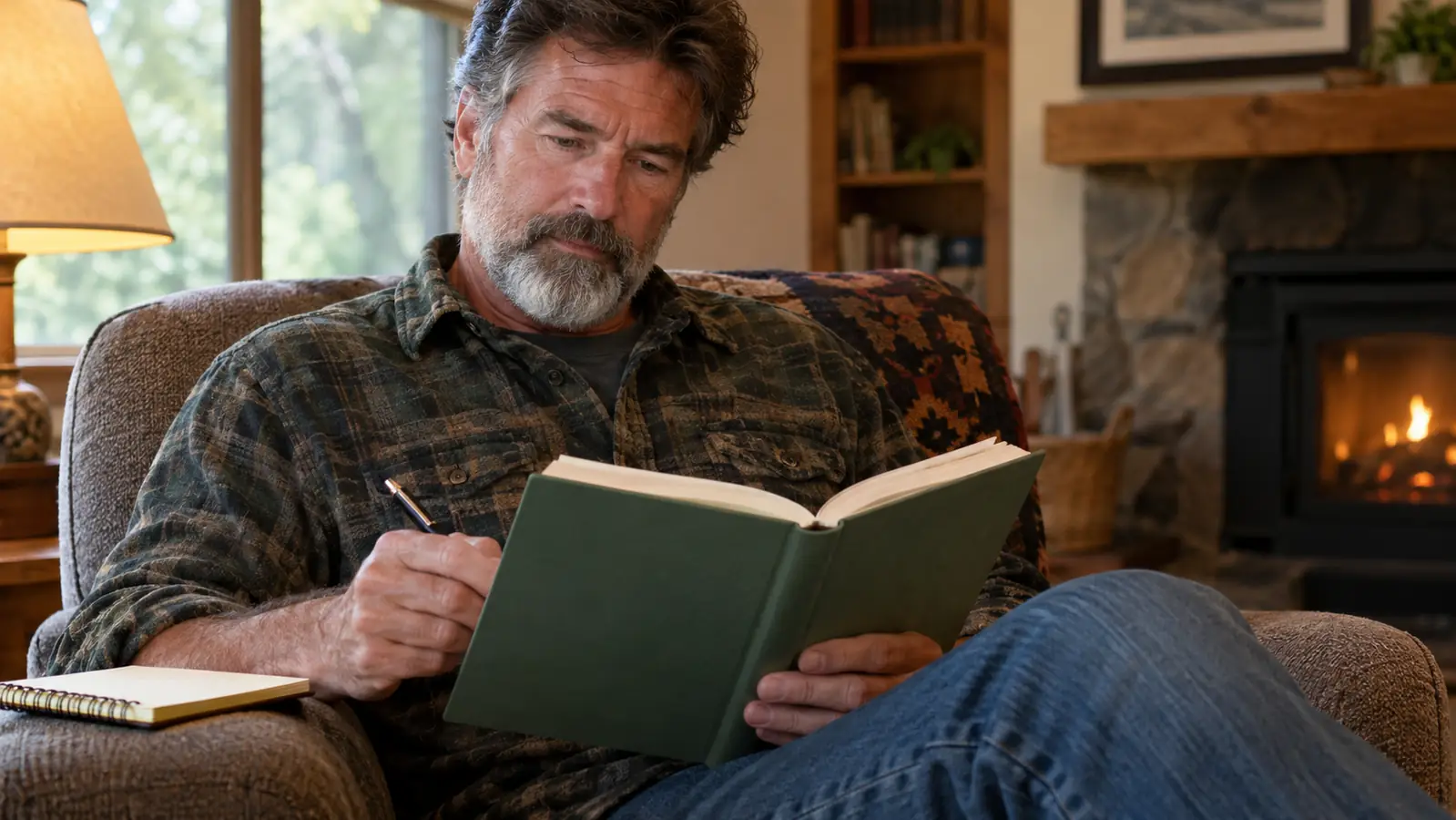
I tested these books the same way I test everything I recommend to my Tuesday morning group: I used them in real life. For about four months, I read Emotionally Healthy Spirituality in my early morning quiet time. I kept a notebook beside my recliner and wrote down which chapters made me stop, which questions I skipped, and which ones I kept coming back to. Then I read two of the most popular lighter Christian books the same way, one in the same season, so I could compare them fairly.
The contrast was stark. The lighter books went down easy. I finished one in four days and felt genuinely inspired. I even underlined a passage about gratitude and told Glenn at supper that I was going to be a more appreciative wife. By the following Monday, I could not have told you what that passage said. But when I looked at my notebook, I could not tell you what I had actually done differently, either. With Peter Scazzero's book, I had pages of notes about specific habits I was trying to change: how I handled conflict with Glenn, how I said yes to church commitments I should have declined, how I avoided sitting still with my own feelings.
I also ran a small experiment with my group. I offered the study to the ten women, and seven of them went through it with me over ten weeks. The three who did not join were honest: they wanted something lighter. That is a fair choice. But the seven who stayed told me the structure, the reflection questions, and the weekly accountability made it different from any book they had studied before.
What the Book Actually Asks of You
Here is what nobody tells you about Emotionally Healthy Spirituality: it asks you to slow down. Peter Scazzero does not give you a checklist of spiritual tasks. He walks you through the idea that emotional health and spiritual health are one thing, and that you cannot be spiritually mature while you are emotionally immature. That sounds simple, but it means looking at your family history, your conflict style, and the ways you have used faith to avoid feelings.
The book is organized around seven marks of an emotionally healthy disciple. I will not list all seven here, but I will tell you that the ones about the daily office and the weekly Sabbath were the ones that changed my routine. I started a simple practice of stopping at set times during the day, and I started protecting a quiet block of time each week. The first time I tried to keep a quiet block, I picked Saturday morning. I sat down at 8 AM with my Bible and my notebook, and by 8:20 I was thinking about the grocery list. It took me three Saturdays before I could sit still for a full hour. That slow failure taught me more than the chapter itself did. Those two habits did more for my faith life than any number of inspirational chapters.
The chapters are not long, which is good for a 6 AM read. But the questions at the end are the real work. Some of them I could answer in five minutes. Others I carried for days. That is the difference between this book and the alternatives: the alternatives tell you what to think, and this book teaches you how to notice what is actually going on inside you.
I needed a book that explained why I kept running on empty even when I was doing all the right Christian things. Peter Scazzero wrote that book.

How It Worked in My Tuesday Morning Group
I want to tell you how this book worked in a real group, because that is where it surprised me. My Tuesday morning women's Bible study has about ten regulars, and we have been meeting for roughly twelve years. We have studied plenty of books together. Most of them, we finish and move on. This one was different. The women started talking about their own patterns, their families, and the things they were avoiding. The room got quieter, and then it got honest. One Tuesday in early March, a woman who had been coming for five years without ever saying much in the discussion told the group that she had realized she used busyness at church to avoid going home to an empty house. She said it quietly, and then she cried a little. Nobody rushed to fix it. That moment could not have happened with a lighter book.
We used the study guide that goes with the book, which gave us questions for each session and kept us from drifting. I will be plain: not every woman loved it. One woman told me it felt like too much work for a Tuesday morning. But the ones who stayed with it said the same thing I did: it changed how they pray, not just what they know. That is the test I care about.
The Hardest Part
I would be doing you a disservice if I pretended this book is easy. It is not. The hardest part for me was the chapter on family history. Peter Scazzero asks you to look at the patterns you grew up with, the unspoken rules in your family, and the ways those patterns show up in your church life today. I grew up in a house where we did not talk about feelings, and I could trace that rule straight into how I ran a committee meeting. I would smile, keep the peace, and then complain to Glenn on the drive home. Writing that down in my notebook was one of the most uncomfortable things I have done in years. I had never done that kind of work in a Christian book, and I did not enjoy every minute of it.
The other hard part is that the book does not let you hide behind activity. I am a doer. I organize, I serve, I show up. This book kept asking me what I was feeling, and I did not always have an answer. My husband Glenn can tell you that I was quieter for a few weeks after some of those chapters. But that quiet is where the change happened. If you are not ready to sit with that, this book may be more than you want right now.
What I'd Tell a Friend Over Coffee
If we were sitting at my kitchen table, I would tell you this: do not buy this book if you want a quick fix. Buy it if you want to do the work. I would also tell you to read it with someone else if you can. The women in my group got more out of the book than I did the first time alone, because we kept each other honest. We met on Tuesday mornings, we talked about the questions we wanted to skip, and we prayed for each other between chapters.
I would also tell you to ignore the pressure to read fast. There is no prize for finishing this book in a week. Some of the best chapters took me two weeks to work through, and I am a faster reader than most. The goal is not to get to the last page. The goal is to let the book change one small thing about how you live your faith, and then another, and then another.
Who Should Buy Which
Buy Emotionally Healthy Spirituality if you are a longtime church person who is tired, busy, and ready to go deeper. Buy it if you have read a shelf full of Christian books and still feel like something is missing. Buy it if you lead a group and want a study that will actually engage the women in the room. This is the book I hand to the women in my group who are ready for honest inner work.
Buy a lighter alternative if you are brand new to Christian reading and need a gentle, encouraging start. There is no shame in that. I have recommended plenty of easier books over the years. But if you are like me, and you are tired of books that feel good in the moment and change nothing, start here. Give yourself permission to go slowly. The book will meet you where you are.
The book that changed how my Tuesday morning group talks about faith
If you are ready to do the slow, steady work of connecting your emotional health to your spiritual life, this is where I would start.
Amazon Check Today's Price on Amazon →